







Free
The Bladerunner Trade
What you'll learn
Understand the core concept and logic behind the Bladerunner Trade
Learn how to use the 20 EMA as a dynamic support/resistance line
Identify valid Bladerunner setups using price action and candlestick confirmation
Know how to trade pullbacks and breakouts with precision
Learn how to place entries, stop-losses, and take-profits based on structure
Discover how to apply the strategy across Forex, crypto, or indices
Analyze real-world trade examples and learn how to avoid common mistakes
Free
Trend and Continuation Patterns
What you'll learn
Understand what market trends are and how they behave
Identify uptrends, downtrends, and sideways/consolidation phases
Recognize key continuation patterns such as:
Flags and Pennants
Triangles (Ascending, Descending, Symmetrical)
Rectangles
Interpret volume behavior during pattern formation
Use these patterns to set entries, exits, and stop-loss levels
Combine trend patterns with other indicators for better accuracy
Free
Understanding Moving Averages
What you'll learn
Understand the concept and purpose of moving averages
Differentiate between Simple Moving Averages (SMA) and Exponential Moving Averages (EMA)
Interpret how moving averages help identify trends and potential reversals
Use moving averages as dynamic support and resistance levels
Apply moving averages in combination with other indicators
Recognize common strategies, such as crossovers and trend-following systems

Free
Technical analysis
What you'll learn
What You Will Learn
By the end of this section, students will:
Understand the fundamentals of technical analysis and why it works.
Learn how to read and interpret basic price charts.
Identify trends, support, and resistance levels.
Recognize simple technical patterns that signal possible market moves.
Gain an introduction to technical indicators used for confirmation.
Free
What is Metal Trading
What you'll learn
The difference between precious metals and industrial metals
How metal markets operate (spot, futures, ETFs, and CFDs)
Factors that influence metal prices (e.g., inflation, supply/demand, geopolitics)
Common trading strategies for gold, silver, copper, and more
How to analyze metal markets using technical and fundamental tools
Free
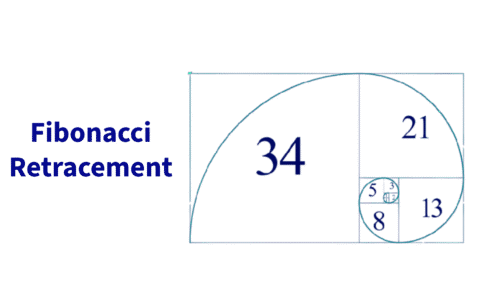
Trading with Fibonacci retracement
What you'll learn
The theory behind Fibonacci retracement and why it works in trading
How to correctly draw and interpret Fibonacci levels on price charts
Identifying confluence zones with Fibonacci and other indicators
Entry, stop-loss, and take-profit strategies using retracement levels
Common mistakes traders make when using Fibonacci — and how to avoid them

Free
Trading Silver
What you'll learn
The fundamentals of the silver market and how XAG/USD is traded in forex and CFD platforms
Key economic indicators and industrial factors that influence silver prices
The relationship between silver, gold, and the US dollar — and how to use it to your advantage
How to apply charting tools, price action, and technical indicators to trade XAG/USD
Trading strategies tailored to silver’s volatility, including trend, range, and breakout setups

Free
Trading Gold
What you'll learn
The fundamentals of gold trading and how XAU/USD works in the forex and CFD markets
Key economic, geopolitical, and technical factors that influence gold prices
How to use gold as part of a risk management or diversification strategy
How to apply technical indicators and charting tools specifically to gold markets
Strategies for trading gold in different market conditions — ranging from trend-following to breakout trading

Free
Introduction to Base Metals
What you'll learn
Base metals are non-ferrous industrial metals including copper, aluminum, lead, nickel, tin and zinc. These metals appear in both industrial and commercial applications, therefore list of market participants who could hedge their price risk is vast. Some firms are hedging a physical price exposure due to their involvement in the supply chain of the metal, while others trade base metals as an investment asset. Discover how base metals futures can help you take part in the opportunities of this market, from how the contracts are constructed to how they may fit into your trading strategy.

Free
Precious Metals
What you'll learn
How to Manage Precious Metals Price Risk
There are numerous examples of how future and options can be used to manage economic risks inherent in commercial operations and in investment portfolios. This module discusses risk management using COMEX and NYMEX Precious Metals futures.
Market prices respond to changing circumstances. We all know that prices will be different in the future to how they are today, but we do not know how different they will be. At a more basic level, while some people make predictions, no one knows with certainty whether prices will be higher or lower in the future.
Free
Introduction to Fundamental Analysis
What you'll learn
Students will gain a strong foundation in understanding how economic, financial, and political factors drive asset prices. They will learn how to interpret financial statements, evaluate macroeconomic indicators, and connect global events to market movements. The course will also teach how to identify undervalued or overvalued assets, analyze company performance, and apply these insights to build long-term trading or investment strategies.
Free
Introduction to Technical Analysis
What you'll learn
The fundamentals of technical analysis and why it’s used across financial markets.
How to read and interpret candlestick charts and price movements.
Key chart patterns such as head and shoulders, triangles, and flags.
How to identify support and resistance levels for smarter trade entries/exits.
The role of trendlines, moving averages, and momentum in market analysis.
Practical strategies to apply technical analysis in real-world trading scenarios.

Free
Advanced technical analysis
What you'll learn
By the end of this section, students will:
Understand how to apply multi-timeframe analysis for stronger confirmations.
Learn how to use Fibonacci retracements and extensions to spot entry and target zones.
Recognize advanced chart patterns such as Head & Shoulders, Triangles, Flags, and Wedges.
Apply oscillators and momentum indicators (RSI, MACD, Stochastic) in advanced contexts.
Integrate multiple indicators and techniques into a cohesive trading strategy.
Free
Fundamental Analysis
What you'll learn
By the end of this section, students will:
Understand the purpose of fundamental analysis and how it differs from technical analysis.
Learn how economic indicators (GDP, inflation, employment, interest rates) affect markets.
Explore how company earnings, balance sheets, and ratios are used in stock analysis.
Recognize the role of geopolitics and global events in shaping market sentiment.
Combine fundamentals with other tools to create a more complete trading picture.
