



Free
Master the trade
What you'll learn
Master the Trade: Futures is a course designed for new traders to increase their understanding of futures contracts and strategies for trading. This course brings together industry professionals so you can hear their perspectives on trading, learn about their strategies, and see how they approach various trading scenarios.
Free
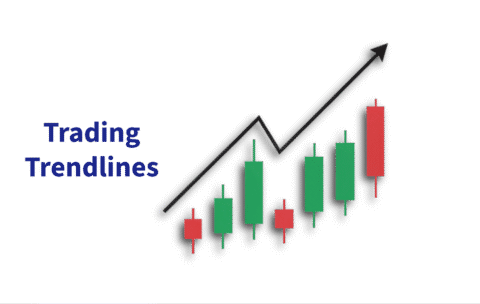
Trading Trendlines
What you'll learn
A trend line can indicate whether or not a trend is present. If a trend line has a positive slope, there is a positive association between the variables. If a trend line has a negative slope, there is a negative association between the variables.
Free
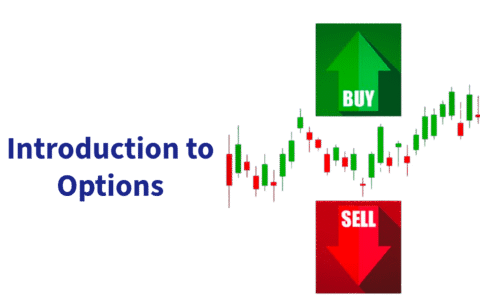
Introduction to Options
What you'll learn
Key Takeaways
Options trading offers traders and investors the choice, but not the obligation, to buy or sell assets like cryptocurrencies and stocks at a fixed price.
In options trading, most trading activity and profits come from buying and selling options contracts rather than exercising them to trade the underlying asset.
American options can be exercised at any point before they expire, whereas European options can only be exercised on their expiration or exercise date.
Understanding calls, puts, premiums, expiration dates, and strike prices is key to making informed decisions in options trading.

Free
Intro Trading Psychology
What you'll learn
Losing money is a particularly difficult test for new traders, who tend to lose very often. It is very hard to believe in yourself when you have no history of success and no way to put losses in perspective. But, being a good trader is like being a good baseball player who is considered a superstar if he gets on base 4 times out of 10. You don’t have to win every time to be a successful trader. You just have to understand that’s the way it is and be comfortable with it.

Free
Micro FX futures
What you'll learn
In this educational webinar series, led by Director of Education David Gibbs, learn more about Micro FX futures ‒ smaller-sized contracts for expressing opinions on the changing value of major currencies against the US dollar.
Free
Introduction to Grains and Oil-seeds
What you'll learn
Today’s agriculture markets are highly complex. Agricultural grain futures and options provide the tools the industry needs to manage risk and help put food on the table for a growing global population. Gain an understanding of the fundamentals that affect supply and demand in the grain and oilseed markets. Find out how futures and options provide critical price discovery and risk management roles for a variety of market participants, from farmers, ranchers, processors, distributors, wholesalers, retailers, traders and more. Discover the ways these contracts can fit into your portfolio.

Free
Introduction to Base Metals
What you'll learn
Base metals are non-ferrous industrial metals including copper, aluminum, lead, nickel, tin and zinc. These metals appear in both industrial and commercial applications, therefore list of market participants who could hedge their price risk is vast. Some firms are hedging a physical price exposure due to their involvement in the supply chain of the metal, while others trade base metals as an investment asset. Discover how base metals futures can help you take part in the opportunities of this market, from how the contracts are constructed to how they may fit into your trading strategy.
Free
Introduction to Natural Gas
What you'll learn
The structure of the natural gas market has evolved over time and become one of the most competitive, efficient, transparent, and liquid natural gas futures and options market in the world. Explore the basics of natural gas infrastructure, key impacts like seasonality that affect supply and demand, as well as hedging physical product using futures and options products.

Free
Precious Metals
What you'll learn
How to Manage Precious Metals Price Risk
There are numerous examples of how future and options can be used to manage economic risks inherent in commercial operations and in investment portfolios. This module discusses risk management using COMEX and NYMEX Precious Metals futures.
Market prices respond to changing circumstances. We all know that prices will be different in the future to how they are today, but we do not know how different they will be. At a more basic level, while some people make predictions, no one knows with certainty whether prices will be higher or lower in the future.
Free
Intro to online trading
What you'll learn
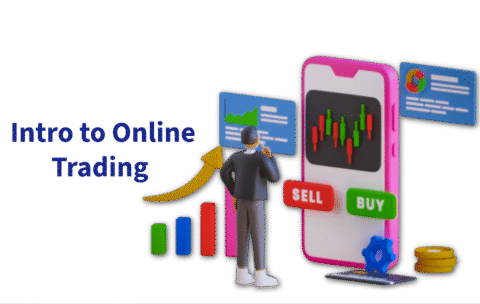
With New to Markets, you’ll gain the essential knowledge and practical skills to begin your journey in online trading. You will learn how financial markets work, the differences between stocks, forex, and commodities, and how to analyze price movements using both technical and fundamental analysis.
Our program also introduces you to vital topics like risk management, trading psychology, and building a disciplined trading plan—the cornerstones of long-term success. By the end, you will understand how to navigate trading platforms confidently and apply proven strategies designed for beginners who want to grow into informed, independent traders.

Free
Introduction to Indicies
What you'll learn
On the Indices Course, learners will gain a solid understanding of how stock market indices work and why they are a vital part of trading and investing. You will learn what indices are, how they are calculated, and the different types of indices that exist—such as global, regional, and sector-specific. The course will explain how indices reflect overall market performance, and how traders use them to gauge sentiment, identify trends, and manage risk. You’ll also explore how to trade indices directly through products like CFDs, futures, and ETFs, while learning strategies for analyzing index movements. By the end of the course, you’ll have the knowledge to confidently understand, interpret, and trade indices as part of your overall capital markets toolkit.

Free
The Traders Edge
What you'll learn
What You Will Learn
By the end of this course, students will:
Gain a clear understanding of Micro Bitcoin and Gold Futures, their contract specifications, and how to trade them effectively.
Develop risk management frameworks to protect capital and ensure longevity in trading.
Recognize and apply common trading patterns in Micro EUR/USD Futures to identify high-probability setups.
Learn how to combine technical patterns with volatility insights for smarter trade entries and exits.
Build a disciplined, structured approach to trading that focuses on consistency over short-term luck.

Free
Intro Trading Candles
What you'll learn
By the end of this section, students will:
Understand the structure of a candlestick (open, high, low, close).
Recognize the difference between bullish and bearish candles.
Identify common candlestick patterns that signal market sentiment.
Learn how to use candles to spot potential reversals and continuations.
Apply candlestick reading as a foundation for broader technical analysis.
Free
Advanced technical analysis
What you'll learn
By the end of this section, students will:
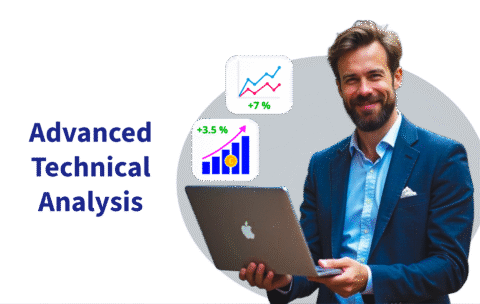
Understand how to apply multi-timeframe analysis for stronger confirmations.
Learn how to use Fibonacci retracements and extensions to spot entry and target zones.
Recognize advanced chart patterns such as Head & Shoulders, Triangles, Flags, and Wedges.
Apply oscillators and momentum indicators (RSI, MACD, Stochastic) in advanced contexts.
Integrate multiple indicators and techniques into a cohesive trading strategy.
Free
Advanced risk management
What you'll learn
By the end of this section, students will:
Apply advanced position sizing models (fixed fractional, Kelly criterion, volatility-based sizing).
Understand portfolio-level risk and how to manage correlations between assets.
Learn dynamic stop-loss and trailing stop strategies to protect profits.
Master risk-to-reward optimisation for higher probability trades.
Build a personal risk management plan that aligns with trading goals and psychology.
Free
Advanced Trading Strategies
What you'll learn
By the end of this section, students will:
Explore multi-timeframe strategy integration for higher accuracy.
Apply volatility and momentum-based trading approaches.
Build confluence strategies using a mix of indicators, chart patterns, and price action.
Understand how to design rule-based systems for discipline and repeatability.
Learn to test, refine, and adapt strategies to different market conditions.
Free
Strategies And Risk
What you'll learn
By the end of this section, students will:
Understand the importance of combining strategies with risk management.
Learn how to evaluate strategies using risk-to-reward ratios and win rates.
Explore how position sizing and stop-loss placement protect capital.
Recognize the psychological role of risk control in maintaining discipline.
Build the foundation for designing strategies that are realistic and sustainable.
Free
Mastering CFDs
What you'll learn
By the end of this section, students will:
Understand the structure and mechanics of CFDs.
Learn how to trade CFDs across multiple asset classes (forex, stocks, indices, commodities).
Apply leverage and margin effectively while avoiding overexposure.
Recognize the advantages and risks unique to CFD trading.
Integrate CFDs into a structured trading strategy with sound risk controls.
Free
Fundamental Analysis
What you'll learn
By the end of this section, students will:
Understand the purpose of fundamental analysis and how it differs from technical analysis.
Learn how economic indicators (GDP, inflation, employment, interest rates) affect markets.
Explore how company earnings, balance sheets, and ratios are used in stock analysis.
Recognize the role of geopolitics and global events in shaping market sentiment.
Combine fundamentals with other tools to create a more complete trading picture.
- 1
- 2
